 Virtual Winter School on Computational Chemistry

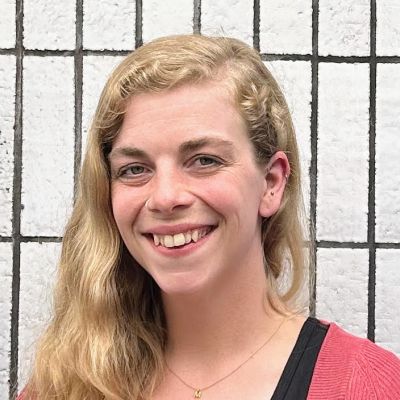
Cate Anstöter
Current Chair
Cate joined the organizing team in 2021, becoming Chair in 2024. She is a Lecturer in Physical Chemistry at the University of Glasgow and her research involves using a computational toolkit to understand electron driven phenomena. Prior to her position, Cate has worked in spectroscopy, computational and theoretical chemistry groups, in the UK, Russia, and the USA.
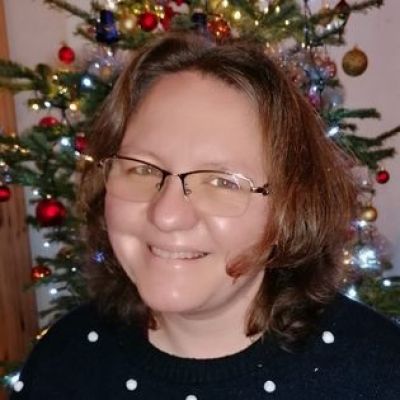
Julianna Oláh
Founder
Julianna has been a member of the organizing team since the first Virtual Winter School on Computational Chemistry in 2015. She is an associate professor and leads the Computational Bioinorganic Chemistry Group at the Budapest University of Technology and Economics, Hungary. She specializes in the modelling of transition metal complexes and metalloenzymes with a focus on systems relevant to human health. She has three daughters and she finds it very important to pass on her love of chemistry to younger generations.
Henrique Castro
Henrique has attended the VWSCC since 2017 and joined the organizing committee in 2021. He is assistant professor at Universidade Federal Rural do Rio de Janeiro (UFRRJ) working with ab initio calculations for molecular magnetism and photochemistry.
Sandra Gómez
Sandra joined the organizing team in 2023. She is a tenure-track assistant professor at the Universidad Autónoma de Madrid, Spain. Her main line of research focuses on simulating light-induced processes in complex molecular systems using quantum and mixed nonadiabatic dynamics methods, with applications in optoelectronics, anticancer therapies, and bioimaging.
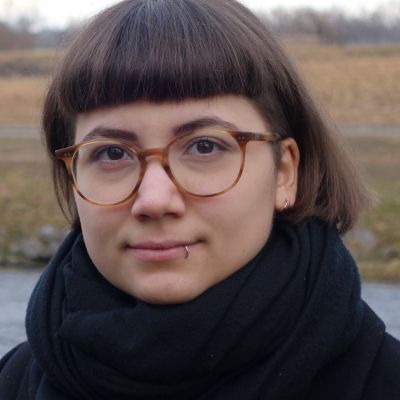
Lea M. Ibele
Lea joined the organizing team in 2023. She is a CNRS researcher at the Institut of Radical Chemistry at Aix Marseille University. Her research is centered around the development and applications of nonadiabatic molecular dynamics approaches, with a special focus on time-resolved spectroscopy and simulating radiative processes.
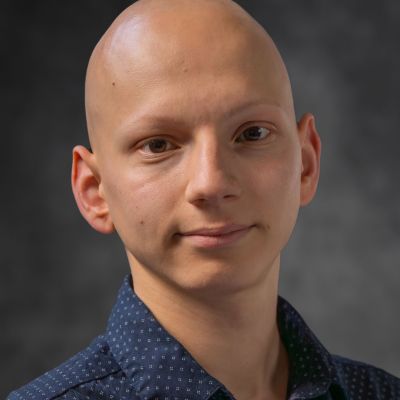
Ben Goldmann
Ben joined the organizing team in 2024. He is a Postdoctoral Research Associate at the University of Edinburgh. His research is concerned with investigating polymers for lubricants and dispersives applications using molecular dynamics simulations.
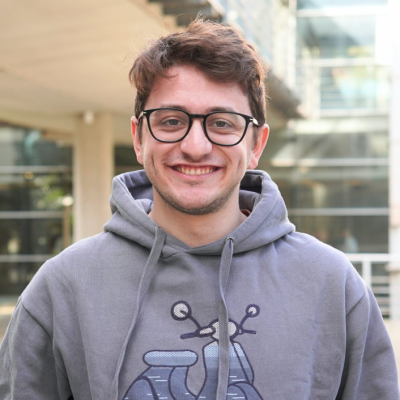
Guillem Pey Costa
Guillem has graduated in Chemistry from the University of Girona (UdG) in 2023 and completed a Master’s in Advanced Catalysis and Molecular Modelling in 2024, also at UdG. Currently, he is a joint PhD student under Josep Maria Luis (IQCC) and Julio Lloret-Fillol (ICIQ), focusing on the influence of external electric fields on molecular catalysis. His research aims to develop software to compute optimal electric fields for chemical reactions, with applications to multi-state reactivity and CO₂ reduction. Complementary goals include modeling catalytic cycles and advancing understanding of nonlinear optical properties.
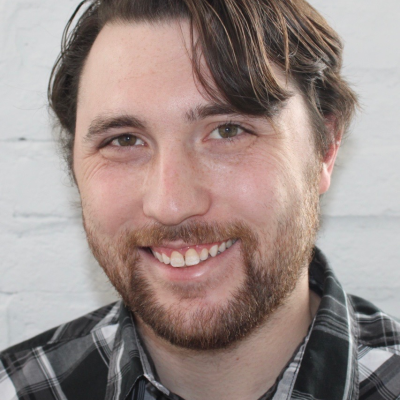
Slater Bakenhaster
Slater joined the organizing team in 2026. He is a PhD Student at Kent State University in Ohio, USA. He researches in the group of Barry Dunietz and studies advanced electronic structure methods for accurate modeling of condensed-phase molecules. His work focuses on screened range-separated hybrid functionals, excited state calculations, charge transfer processes, and photochemistry.
Audrey Ngambia
Audrey is recent PhD graduate in chemistry and currently a Postdoctoral Research Associate at the University of Edinburgh. She is interested in developing molecular models of biochar and understanding interactions that influence the changes in biochar structure during adsorption processes in water and soil by combining molecular dynamics and experiments.
Christian Pachl
Goedele Roos
Founder & Former Chair
Goedele works as CNRS researcher at the Unité de glycobiologie structurale et fonctionnelle (UGSF, Univ. Lille, France). She founded the Winter School initiative in 2015 with the help of Julianna Oláh (Budapest University, Hungary), Andreas Savin (CNRS, UPMC Sorbonne Universités, France), and others. After seven editions of the Winter School, her focus returned to her research activities in the field of computational (redox)biochemistry.
Rebecca Ingle
Chair until 2024
Rebecca has been a member of the organizing team since 2016 and was the chair until the 2024 event. She is a Lecturer at University College London and her research involves the development of ultrafast optical and X-ray spectroscopies for studying molecular systems in combination with the application of different computational approaches.
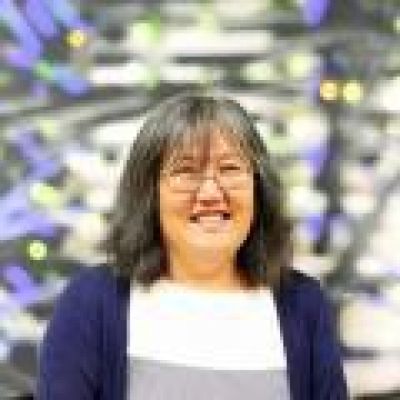
Rika Kobayashi
Rika has been with the organising team since 2018. She is a computational chemist at Australia's NCI Supercomputer Facility. Her background is in ab initio method development and implementation, especially coupled cluster theory. Her current interests are in Machine Learning and remote collaboration initiatives.
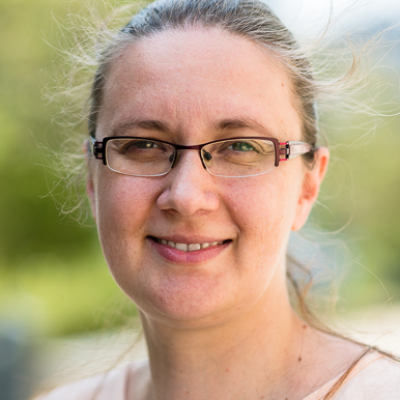
Milica Feldt
Milica joined the organizing team in 2019. She is currently working as a group leader at the Leibniz Institute for Catalysis (LIKAT), Rostock, Germany. Her main research interest is computational studies of transition metal catalysis.
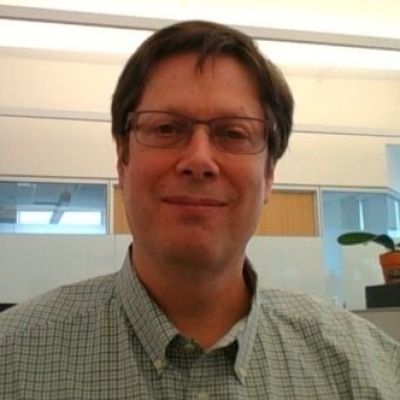
Robert Q. Topper
Robert is a professor of chemistry in the School of Engineering at the Cooper Union for the Advancement of Science and Art in New York City. A former principal organizer of the Electronic Computational Chemistry Conference, he joined the VWSCC organizing team in 2022. His research is currently focused on the development and application of new methods in stochastic sampling, machine learning, and quantum chemistry to problems of environmental interest.
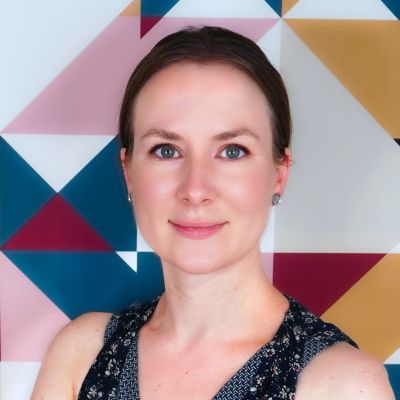
Dominique Buyens
Dominique joined the organizing team in 2022. She has recently finished her Ph.D. at the University of Pretoria, South Africa, and is currently a Postdoctoral Fellow in chemistry education. Her main interests are in experimental and theoretical chemical and enzyme kinetics, with specialization in NMR and UV spectroscopy and mass spectrometry.
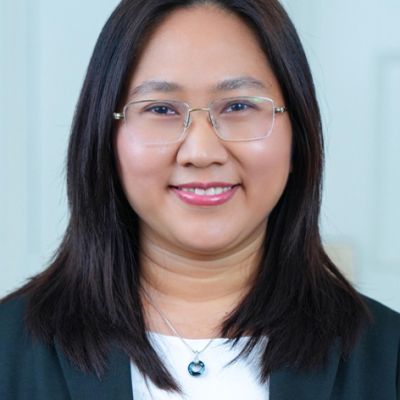
My-Phuong Pham-Ho
My-Phuong joined the organization in 2024. She earned her bachelor's and master's degrees in chemical engineering at HCMUT in Vietnam, followed by a PhD from the University of Utah in the USA. Since 2011, she has been a lecturer at HCMUT where she conducts research on boron/silicon clusters doping metals. Her work focuses on exploring these novel materials for potential applications in hydrogen storage and carbon dioxide capture.
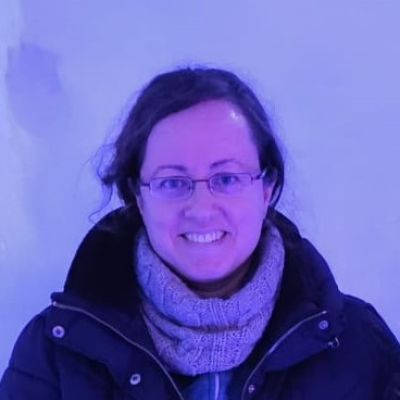
Ephrath Solel Moroshko
Ephrath joined the organizing team in 2024. She is a Lecturer in Computational Organic Chemistry at the University of Edinburgh. Her research focuses on computational studies of reactivity in organic and inorganic reactions, quantum tunneling, reaction mechanisms, and noncovalent interactions.
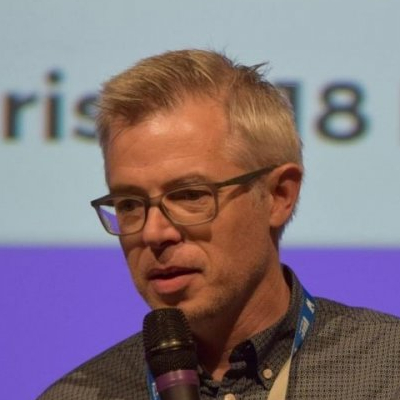
Marc Dechèvre
Marc loves Open Source in general and Joomla in particular (Joomla is the Content Management System to build this website).
Marc is always very happy to share his knowledge. See for example his numerous presentations around the globe on slides.woluweb.be
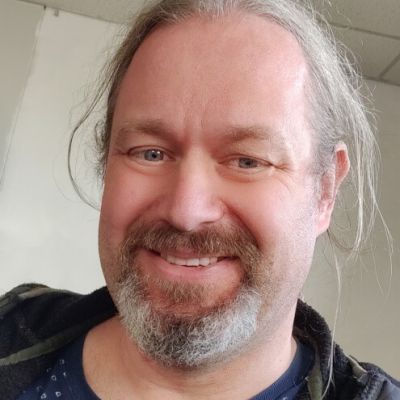
Jurgen Gaeremyn
Jurgen is a tech enthusiast with a long standing experience in Joomla and webdesign. As an avid open source advocate, he believes that knowledge should be made accessible wherever possible. For this reason, he stepped into the Winter School project from the very beginning.

Oleg B. Gadzhiev
Oleg joined the Organising committee in 2017 volunteering and organizing in practical and technical aspects. Research interests concentrate but not limit to theoretical treatment of reaction mechanisms by state-of-the art (multireference and novel) quantum chemical methods, molecular (metal-free and metal-organic) catalysts, platinum and platinum-based nanocatalysts for stereo-and regioselective hydrogenation, development of chemical and kinetic models for material design and chemical vapor deposition.